

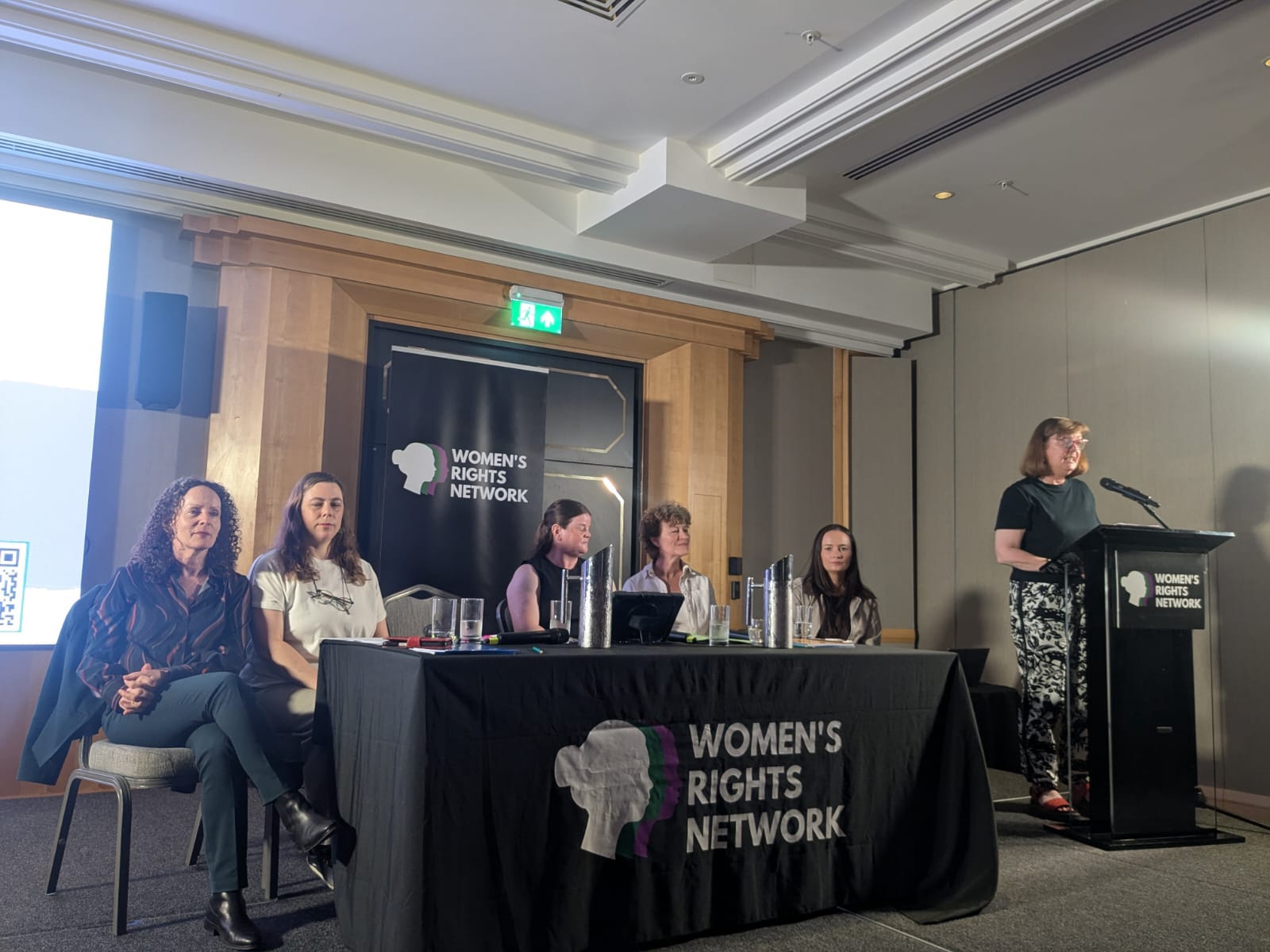
Left to right: Fiona McAnena of Sex Matters, Sorcha nic Lochlainn of The Countess, Danielle Loughrey of Gaels For Fair Play, Marianne Driessen of Athena Forum and Nora Calder of WRN NI. At the podium is journalist Catherine McGinty, who moderated the event
I spent last Thursday writing a response piece to Allison Morris’s ignorant and nasty op-ed in the Belfast Telegraph. I had been told that if I filed 600 words, the paper would “consider” publishing it, and though I thought this was an insulting response from an outlet to a woman who had been traduced by one of their columnists as outrageously as I had been on BBC Radio Ulster Talkback, I decided to do it because the women of Women’s Rights Network Northern Ireland had asked me to.
When I filed it close of play Thursday, I got a short response from the paper’s editor, Martin Breen:
I’m on leave after tomorrow for the next two weeks, so our Head of Content may be in touch with you regarding this. The current plan is to publish something on either Saturday or Monday, subject to final scheduling.
Having had an initial look, I can’t see any significant issues with the majority of the piece. The only point I would suggest revisiting is the references to the BBC radio programme, as I mentioned previously. Our readers will be familiar with Allison’s column, but not necessarily with a radio debate that did not appear on any of our platforms.
As with all opinion pieces, the article will go through our usual editorial process, including legal, style and other editorial checks. Once those edits have been made, we will send the revised version back to you for approval. Nothing will be published until you have had the opportunity to review it.
And then for days I heard nothing, despite several further emails as well as phone calls on my behalf by WRN NI.
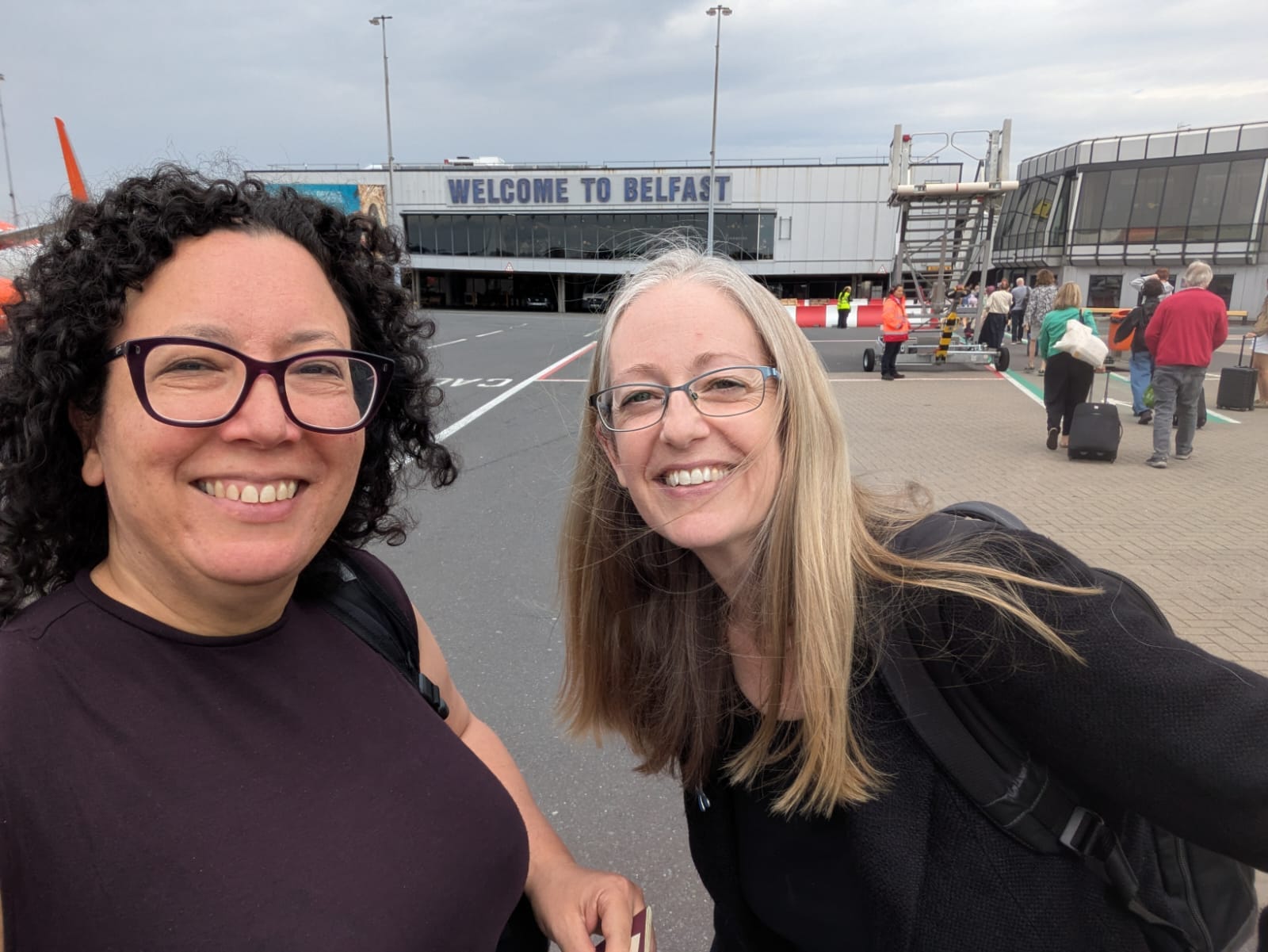
On Monday, together with my colleague Maya Forstater, I arrived in Belfast. We hadn’t expected to attend — in fact I was meant to be on vacation — but once the event was cancelled we felt it was important to show support.
Finally, on Tuesday afternoon — too late for the piece to make any sense, since the popup event organised to replace the cancelled panel had been and gone — I finally hear back from Adrian Rutherford, the paper’s head of content (I’ve omitted a section that related solely to WRN NI):
Apologies that I am only replying now. Some staff members were unexpectedly absent yesterday who I needed to speak to re this.
We had committed to running a response from WRN and we are offering to run the piece that […] sent us, in an edited form which has been copied below.
We are very happy to publish robust and strongly argued views on this subject, including views which challenge arguments made by our journalists. However, we don’t think the second piece offered by Helen works for us editorially because it is primarily focused on challenging Allison Morris’s credibility and the quality of her journalism, rather than advancing the wider debate on the substantive issues.
There is also a significant amount of material already in the public domain making that case, including Helen’s own piece published online following the BBC Radio Ulster discussion. In that article, you describe Allison as having engaged in “terrible journalism” and say you intend to provide an “unvarnished assessment” of her work. That makes the proposed Belfast Telegraph piece feel more like an extension of an existing dispute than a fresh contribution to our opinion pages.
We also would not ordinarily feature or reproduce a debate or exchange which took place on another broadcaster’s platform, particularly where it did not involve the Belfast Telegraph or originate on any of our platforms. The fact that the BBC discussion took place therefore does not, in itself, give us a reason to publish a piece principally revisiting that exchange.
…
Helen, re your comment proposal, while we are not running this offering, it is not to say we would not consider opinion pieces from you in future. As always, we would be happy to consider submissions addressing relevant issues and debates in this broader area, provided they offer a distinct contribution to the discussion and are suitable for our opinion pages.
I’m hardly surprised at the cowardice and lack of integrity on display in this reply: this is an outlet that published Morris’s column, after all. But I did the work of writing the piece (and 600 words takes hours longer than 1,000, so I feel pretty cross).
So here it is, as filed.
On July 27th Allison Morris wrote about Féile an Phobail cancelling a panel organised by Women’s Rights Network Northern Ireland because it “campaigns against rights for the Transgender community”. Morris slurred the grassroots group as “aligned with right wing, misogynist political agitators”, and falsely claimed they were “heavily funded”. Fiona McAnena, my colleague at human rights charity Sex Matters, was among the speakers.
On July 28th, when Morris and I appeared on BBC Radio Talkback, Morris doubled down. She claimed JK Rowling funded WRN’s legal action against Féile, that “you couldn’t get a sheet of paper” between me and WRN and the “far right”, and that our supporters were “the same people that were cheering on attacks on migrants”.
In fact, WRN NI self-funded its legal action. It subsists on tiny donations and volunteers’ time, while Féile receives £800,000 annually from the taxpayer. As for our “far right” position, it’s simply that humans come in two sexes, and acknowledging this matters for women’s rights.
This position is held by almost everyone: both sexes, all ages, all politics, every faith and none. Polling last year found that 72% of Northern Irish voters supported the UK Supreme Court ruling that trans identification doesn’t change a person’s legal sex, including majorities of Unionist and Sinn Fein voters.
And anyone can play guilt by association. I could point out that Morris’s position on this issue is shared by those waving banners at London Trans+ Pride on July 25th calling for Rowling to be murdered and women like me to be gassed. It’s shared by the trans-identifying man convicted in 2024 for telling me that he would love to rip my eyes out, chop my hands off and carve my face up. But I wouldn’t stoop so low.
Morris observes that most violence against women is in the home. But that’s because the home is where bad men have easiest access to women, and women are least able to escape. Thinking this means it’s safe to let men into women-only public spaces is as silly as saying that because most traffic accidents involving pedestrians happen on local and regional roads, we can all go for strolls on motorways.
Of course keeping trans-identifying men out of women’s spaces won’t stop all violence against women. But it will stop some, and I think that’s worth it. This is the position Morris misrepresents, in a parody unworthy of a serious journalist, as women like me claiming that public toilets are “the most dangerous place on earth for women, with trans predators lurking in every cubicle”.
On Talkback, Morris insisted my position requires believing that “all trans women are deviants and sex offenders”. No: just that they are men, that some men harm women and that if you make it easier for men to enter spaces where women are vulnerable, some of those who take advantage will indeed be “deviants and sex offenders”.
As Morris herself said, sex offenders are “the most devious people on earth”, befriending single mothers online and becoming priests and football coaches to gain access to victims. Why she can’t see that some will claim to be women for the same reason is a mystery to me.
I know of hundreds of cases where men who claim to be women have entered women-only spaces, from toilets and changing rooms to mental health support groups and prisons, and harmed women by exposing themselves, watching those women undress and in the worst cases, assaulting and raping women.
Morris writes that she is “baffled” by our position. I suggest she takes the time-honoured journalistic approach of sitting down with WRN NI, asking good-faith questions and listening to the answers.
Helen Joyce is a former staff journalist at The Economist, where she held many posts including Brazil correspondent, Finance editor and Britain editor. She is the author of the best-selling “Trans: Gender Identity and the New Battle for Women’s Rights” and now works for the human-rights charity Sex Matters.
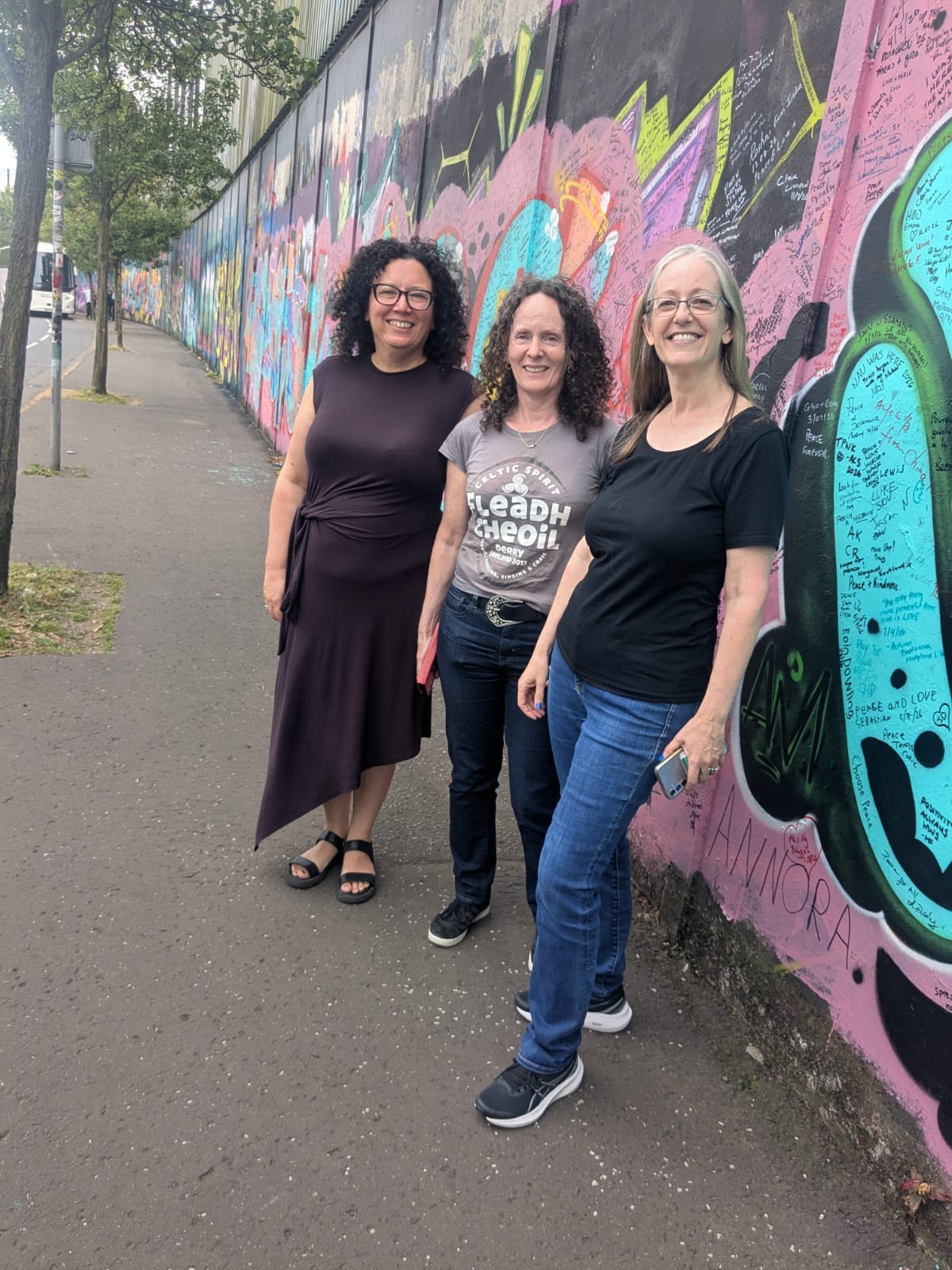
No trip to Belfast is complete without a picture at the Peace Wall.
You have every right to feel cross about being asked to write something then having it so rudely rejected--especially after the appalling BBC interview. Thank you for letting us read it here.
Can everyone who reads this page write to/email the weaselly Mr Rutherford and tell him that there is a time and a place for men to show some balls and it's here, in this debate. It may not make him change his mind, but it will be bloody irritating.